
What is a SEM agency?

«A SEM agency activates campaigns with control and measurement so every click translates into real opportunities.»
What is SEM?
SEM or Search Engine Marketing, which we would translate as Search Engine Marketing, is commonly known as the set of marketing actions that use paid advertising to gain visibility and acquire customers from ad platforms. If we are strict, this definition of SEM is not entirely precise. SEM refers to search engine marketing as a broad concept, so it may include SEO and other actions aimed at gaining visibility in search engines. Within that framework, search engine advertising fits better under the term SEA (Search Engine Advertising). In practice, however, usage has consolidated differently: most professionals and companies use SEM to refer to paid advertising in search engines and social networks.
In its classic sense, SEM focuses on ads in search engines, marketplaces, and social networks, where the brand appears when someone searches for a product or service. The most popular SEM channels are Google Ads, Microsoft Advertising, and Meta Ads, which includes Facebook and Instagram. But there are other channels such as TikTok Ads, X Ads, LinkedIn Ads, Pinterest Ads, Amazon Ads, etc. SEM generally works with bidding and you usually pay when the user clicks on the ad.
What is an SEM agency?
An SEM agency designs, executes, and optimizes a customer acquisition system based on advertising investment. Its work does not consist of launching ads and letting them run on their own. The main mission of the SEM agency is to achieve the maximum return on the client’s investment, that is, to obtain the highest number of leads or sales spending as little as possible and always with method, control, and measurement.
An SEM agency starts from three operational questions: how much the company can pay for a customer, what volume it needs to grow, and what signal defines a valid conversion. With those answers it builds the acquisition strategy, selects the channels, defines the campaign structure, prepares the measurement, and creates a continuous optimization cycle.
In SEM, the agency works with intent and audiences, and decides where to invest according to the user’s moment and the business objective. The agency decides the role of each platform within the system: which channel creates demand, which captures intent, which recovers users who are comparing, which pushes the conversion, and which provides efficiency or volume. Sometimes, depending on the channel they specialize in, the agency takes on the name of that channel, and it is more common to refer to a Google Ads agency or a Meta Ads agency rather than simply a SEM agency.
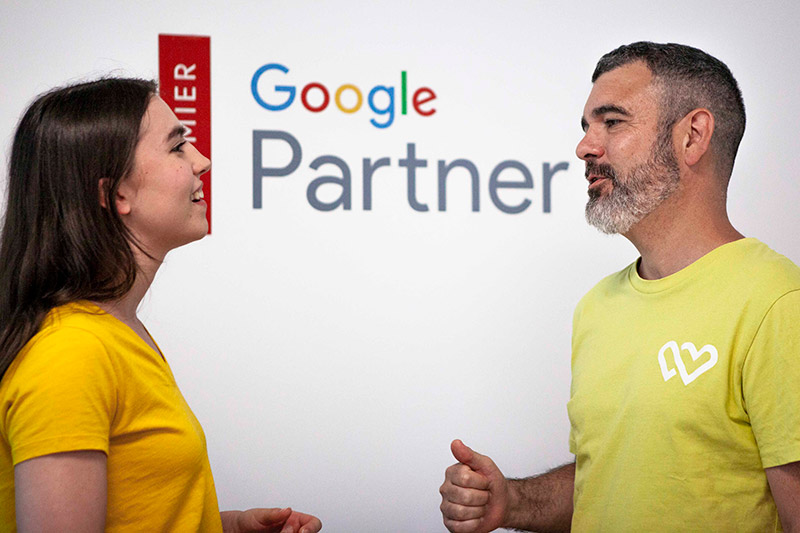
A useful, applied, and measurable definition would be this: an SEM agency manages a multichannel acquisition system on ad platforms, focused on generating results and sustaining profitability through measurement, optimization, and data-based budget decisions.
Advantages of SEM
When we compare SEM with other channels such as SEO, SEM has very clear advantages that position it as an essential channel for any digital marketing strategy. For example:
It provides immediate visibility. By simply publishing the campaign we appear in prominent positions in the channels, which allows us to obtain leads without waiting months as happens with SEO. This is essential when fast results are needed or when you want to take advantage of specific moments such as promotions and seasonal peaks.
SEM gives you budget control. You define how much you invest per day or per month, adjust spending at any time, and pay per click under the PPC model, which allows you to manage investment more precisely and limit risk when working with finite resources. In the end, it is like buying leads.
SEM is flexible and adapts to the business. You can pause campaigns, change ads, modify targeting, adjust bids, and redistribute budget in real time according to performance or market changes.
SEM allows greater precision and lets you improve targeting. You can impact by location, schedules, demographic variables, and interests, and refine delivery to reach users with a higher probability of converting.
SEM offers a wide variety of formats and campaign types. You can combine search, display, video, app, shopping, and other formats depending on the objective, which allows you to cover different stages of the funnel, reach the target customer across various channels, and adjust the mix according to performance, cost, and volume, instead of depending on a single format or platform.
SEM has memory and allows you to measure and optimize with real-time data. You access metrics for impressions, clicks, and conversions, and use that information to adjust creatives, keywords, targeting, and landing pages. In addition, the use of smart campaigns enables learning and improves campaign performance over time.
SEM is useful for testing. You can validate messages, creatives, categories, and keywords, identify what converts, and transfer that learning to other marketing actions. It is also easier to estimate campaign reach and costs, which enables proper planning without committing to large investments without knowing future returns.
Main SEM channels
Within SEM there are many advertising platforms, but three channels stand out above the rest in terms of investment volume, advertising maturity, and ability to consistently generate results: Google Ads, Meta Ads, and Microsoft Advertising. From there, the ecosystem is much broader. Many brands also invest in TikTok Ads, X Ads, Pinterest Ads, Amazon Ads, YouTube Ads, Spotify Ads, Reddit Ads, or in programmatic through DSPs, as well as marketplaces and industry-specific networks. The choice depends on the objective, real demand, creative capacity, and available measurement.
Google Ads leads when the priority is to capture direct intent and convert existing demand. Meta Ads stands out when you need volume and large-scale audience targeting capacity. Finally, Microsoft Advertising completes the group as a solid complement, not an alternative, to Google Ads, as it usually has lower costs.
From here, it is worth understanding what each one contributes and in which cases it usually fits best.
Google Ads
Google Ads is usually the central SEM channel because it captures direct intent. The user searches for a solution and we want to appear at the exact moment, which shortens the purchase cycle and accelerates conversions if the offer fits.
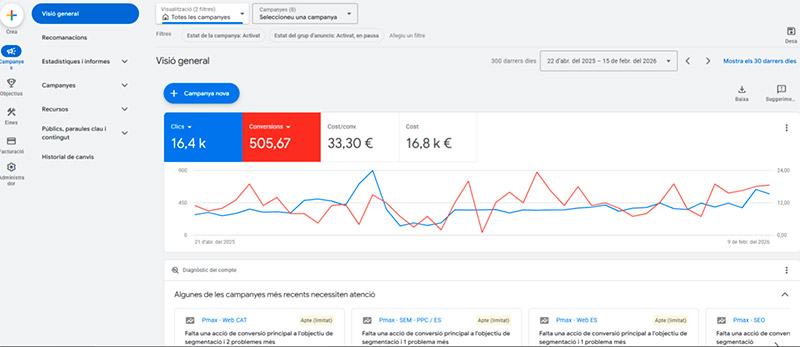
The key in Google Ads is to structure by intent and profitability. We separate brand from generic terms, protect categories with margin, and control search terms with negatives to avoid wasteful spending. From there, three levers are optimized: traffic quality, conversion rate, and value per conversion. When we close that triangle, we can scale budget without deviating CPA or ROAS.
Google Ads also allows you to choose the format according to the business model. Search works well for services and categories with explicit intent; shopping fits e-commerce; video and display provide coverage and support closing when used with the right objectives and audiences.
Meta Ads
Meta Ads usually provides volume and reach. It does not capture search intent, but finds demand through audiences and behavioral signals. That makes it useful for scaling when search becomes more expensive or when we need to impact before the user searches for our product or service or when the user simply does not know that the service or product exists.
The key in Meta Ads lies in the creative system and audience structure. You need creatives that explain value in seconds, and a scheme that combines prospecting and remarketing without duplicating impact. Here, optimization relies on fast tests of message and format, frequency control, and attribution window management to avoid overestimating results.
Microsoft Advertising
Microsoft Advertising consists mainly of advertising on the Bing search engine; in fact, in the past it was known as Bing Ads. We should approach this SEM channel as a complement to Google Ads; it is the smaller sibling. That is why many SEM agencies activate it as a second search layer once Google Ads is stabilized, because it allows you to replicate structure and leverage learnings without starting from scratch.
It is advisable for the agency to be certified
Certifications do not guarantee results on their own, but they do reduce operational risk. When an agency is certified, it shows that it trains its team, works with platform standards, and meets requirements reviewed by the provider itself. In addition, there are usually different levels of certification. For example, in Google Ads, Google Partner Premier is held only by the top 3% of agencies according to Google. This indicates that the Google Ads agency meets performance, investment, and certification criteria, and that Google reviews that status regularly. This usually correlates with teams that master account structure, optimization, and measurement best practices.
At Microsoft, in addition to the Microsoft Partner Program aimed at agencies, there is a training and certification system with exams and credentials that accredit knowledge of the platform. When the agency certifies the people who manage your account, you reduce basic errors and gain consistency in execution.
At SEMSEO Agency, for example, we are Google Partner Premier 2025 and Microsoft Advertising Partner 2025. To validate this, simply ask the SEM agency to share their partner profile or valid credentials, identify who manages your account and what certifications they have, and explain their measurement and optimization process. If they cannot specify these three things, the badge loses value.
What tools does an SEM agency use?
An SEM agency uses various tools to manage campaigns, measure results, and turn data into decisions. The stack changes by sector and maturity, but it is usually organized into these layers.
Ad platforms
Google Ads is the operations center in most accounts. From there, search, shopping, video, and performance-oriented campaigns are managed. It allows us to control structure, bids, audiences, creatives, experiments, and conversion measurement within the platform.
Microsoft Advertising covers Bing inventory and partners. It is generally used to replicate or adapt Google search and shopping campaigns. Obviously, it is independent from Google and campaigns can be set up similarly to Google exclusively on Bing.
Meta Ads Manager is used for campaigns on Facebook and Instagram. It provides audience management, creatives, events, and remarketing focused on volume and performance.
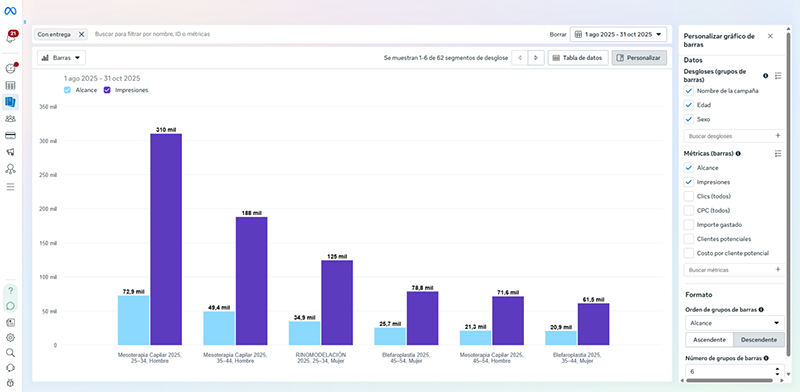
LinkedIn Campaign Manager, TikTok Ads Manager, or Amazon Ads are other popular ad platforms.
Measurement and tagging
Google Analytics 4 is used to read behavior and conversions, validate funnels, and compare performance by channel, campaign, and landing page.
Google Tag Manager is used to implement tags, events, and conversions with agility. It reduces dependence on the technical team and improves tracking control.
Pixel platforms and conversion API. In Meta, for example, the conversions API is used to improve signal quality when there are browser and consent limitations. The agency must install it when measurement and learning require it.
Reporting and dashboards
The use of Looker Studio is common for operational dashboards: pacing, CPA, ROAS, conversion rate, evolution by category and market. It is complemented with spreadsheets when budget, forecast, and scenarios need to be controlled.
Other tools such as Power BI or Tableau are used when the business needs more robust data models or integration with various internal sources.
Research and planning
Google Keyword Planner is used to estimate demand and cost ranges in search engines. It helps prioritize categories, intents, and markets.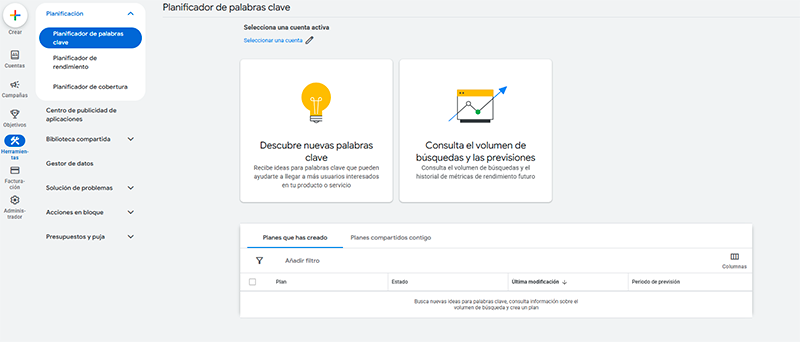
Suites such as Semrush or Ahrefs are used for competitive analysis, keyword ideas, SERP reading, and opportunity detection. They do not replace account data, but they speed up research.
Regarding creative management and library tools, the SEM agency must use ad libraries, tagging systems, and repositories to version creatives, control fatigue, and measure by concept and not only by ad.
CRO and landing experience
Hotjar or Microsoft Clarity are used for heatmaps, scroll tracking, and recordings. They help find friction that increases CPA: unnecessary fields, weak messages, mobile issues, load times.
Testing platforms such as VWO, Optimizely, or equivalent tools are used when there is enough traffic to run tests that deliver measurable impact.
Feeds and catalog in e-commerce
Google Merchant Center is used for shopping feeds and catalog problem diagnostics.
Feed managers such as Channable, DataFeedWatch, or similar products are used when there are many SKUs, variations, pricing rules, and the need to optimize attributes at scale.
Automation and operational control
Automatic rules and scripts within the platforms are used for alerts, budget control, threshold-based pauses, and repetitive tasks.
Connectors and automation (for example, Zapier or Make) are used when data must be moved between forms, CRM, spreadsheets, and reporting without manual work.
A solid SEM agency does not boast about software. It defines a minimum stack that ensures control, measurement, and learning. If the business sells through leads, the CRM and offline conversions become part of the core. If it is e-commerce, the feed and catalog control become critical. If measurement fails, any software stops mattering.
SEM agency working methodology
Methodology makes the difference between spending and acquiring customers. In SEM, budget moves fast and mistakes are paid for in days, not months. If the team works without process, the account turns into isolated adjustments: bids are changed, ads are rotated, and targeting is expanded without a common criterion. This usually inflates CPA, contaminates data, and blocks learning.
A methodology sets the work order and defines what is adjusted, when, and why. It ensures reliable measurement, a structure that allows control of intent and profitability, and that each optimization responds to a hypothesis. It also enables scaling without breaking results, because it turns performance into a repeatable system and not a chain of reactive decisions.

A correct SEM management methodology must follow these steps:
- Diagnosis and objective definition.
The agency starts by understanding the business and translating it into operational metrics. It reviews average ticket, margin, seasonality, sales capacity, and campaign history. From there it sets the main objective and the economic guardrail.
It defines what success means in your case. It may be a maximum CPA, a minimum ROAS, a cost per qualified lead, or a value per conversion. If you work with leads, it also defines what is considered a valid lead and how its quality will be measured. - Measurement and data preparation.
The agency validates tracking before investing. It configures conversions, key events, and values when applicable. It checks that each conversion is recorded only once, that attribution is correct, and that data matches between platform and analytics.
If the business closes sales outside the website, it integrates offline conversions from the CRM or sales system. This allows optimization toward quality, not just forms. - Intent strategy and budget allocation.
The agency separates intent to control performance. It defines brand and non-brand campaigns and splits traffic by stage: transactional, comparative, and latent demand when relevant.
It decides budget distribution by category, market, and priority. It establishes a pacing system to avoid burning investment at the start and to protect profitable campaigns. - Campaign architecture and setup.
The agency creates a structure that facilitates control and learning. It defines naming, campaigns, groups, geographic targeting, schedules, devices, and audiences. It creates initial negative lists and rules to expand them with real data.
It publishes ads with variants by message and value proposition. It activates assets and necessary settings to improve performance without losing relevance. - Launch and initial learning.
The first objective is not scaling. It is to learn fast without overpaying. The agency reviews search terms, detects leaks, corrects targeting, and adjusts ads and landings. In this phase, what blocks the account usually appears: poorly filtered intent, landings that do not convert, weak messages, or incomplete tracking. The agency prioritizes what moves CPA and conversion rate. - Weekly optimization.
The agency works with a stable cycle. It reviews performance by campaign and by intent, cleans search terms, adds negatives, and adjusts bids and budgets according to objectives. It tests ads with clear hypotheses and controls creative fatigue when the channel requires it. It adjusts targeting and audiences to raise conversion rate without losing volume. If CPA increases, it quickly decides whether to cut, restructure, or change the intent focus. - Landing optimization and applied CRO.
The agency aligns ad and landing to increase conversion. It reduces friction, improves offer clarity, and works on elements that impact performance: speed, mobile design, forms, trust, and social proof. It prioritizes by impact. It starts with landings with the highest spend and lowest conversion. This lowers CPA without increasing budget. - Controlled scaling and expansion. The agency scales what already works. It increases budget with pacing control, opens new keywords or audiences, expands categories, and tests new geographies. It defines limits to protect profitability. If a line breaks CPA or ROAS drops, it reduces exposure and redistributes investment. Scaling is not “spending more.” It is buying more results at the same target cost or better.
- Decision-oriented reporting.
The agency reports to decide. It explains what grows, what drops, and why. It presents concrete actions: what is paused, what is restructured, what is tested, and what is scaled. The report connects investment with business impact. If you work with leads, it includes quality and closing when data exists. If you work in e-commerce, it includes value, margin, and categories. - Continuous improvement.
The agency maintains a prioritized backlog. It orders actions by impact and effort, and executes with discipline. This avoids constant changes without learning and builds stable performance.
The SEM agency as a strategic growth partner
As you have seen, an SEM agency is not just a provider that manages ads; it acts as a strategic partner that turns advertising investment into sales and growth with control and measurement. Working on SEM with a partner you connect with does not mean paying for clicks; it means building an acquisition system that generates business opportunities consistently and that you can scale without losing profitability.
The difference between investing without return and growing with a stable acquisition cost usually depends on having a team that understands advertising platforms and, at the same time, your company’s objectives. When the agency defines measurement correctly, structures campaigns by intent, and optimizes with method, SEM stops being a variable expense and becomes a growth lever.

Francesc Sánchez — CEO
I am passionate about strategic consulting and digital marketing, specialising in SEO. I love automation and the intelligent use of AI.


